
April is Workplace Violence Prevention Month, and across healthcare it marks a critical time to recognize an urgent issue affecting nurses and care teams every day: workplace violence. This month is about more than awareness—it is about standing together, across professions and communities, to say clearly and unequivocally that violence in healthcare is not “part of the job.” It is unacceptable, and it is preventable.
Every day, healthcare workers—nurses, physicians, physician associates, social workers, technicians, pharmacists, and countless others—show up to deliver care under increasingly complex and challenging conditions. Yet too often, they do so while facing the risk of physical assault, verbal abuse, harassment, intimidation, or other threatening behaviors. According to data from the U.S. Bureau of Labor Statistics, healthcare and social service workers experience workplace violence at higher rates than any other sector, a deeply troubling reality that continues to worsen.
There has been a 30% increase in workplace violence across all health care facility types between 2011 and 2021/2022.
Bureau of Labor Statistics’ Survey of Occupational Injuries and Illness
Workplace violence includes any act or threat of physical harm, harassment, intimidation, or other disruptive behavior that occurs at work. In healthcare settings, this violence affects not only nurses, but also physicians, physician associates, social workers, pharmacists, technicians, other support staff, patients, and families. For nurses in particular—who spend the most time at the bedside—these incidents can feel constant and exhausting. No act of aggression, whether verbal or physical, is acceptable.
Why Workplace Violence Prevention Matters to the Public
Workplace violence harms everyone. For healthcare workers, it contributes to stress, burnout, injury (physical and moral), and often workforce attrition. For patients and families, violence disrupts the healing environment and can delay care, reduce trust, and compromise safety. When health care professionals do not feel safe, the entire healthcare system suffers.
Healthcare settings should be places of healing, and respect—not fear. Normalizing violence in these settings strips dignity from care and weakens the ability to meet the needs of patients and communities. Protecting health care workers is not just a workforce issue; it is a patient safety issue.
A United, Cross‑Sector Response
What makes this moment different is the strength of collective action. National organizations representing nurses, hospitals, clinicians, patients, and advocates recently came together to affirm in a public statement that nobody should be harmed while providing or receiving care. Addressing workplace violence requires collaboration across the healthcare system and beyond—bringing together frontline workers, healthcare leaders, policymakers, and the public.
Preventing workplace violence means building comprehensive, coordinated solutions that focus on:
- Establishing clear policies that prevent and respond to workplace violence
- Clear reporting systems and accountability
- Organizational policies that support zero tolerance for abuse
- Supporting frontline workers through training, reporting systems, and resources
- Promoting a culture where abuse is never tolerated or dismissed as “part of the job”
- Designing care environments with safety in mind
- Collaborating across disciplines and sectors to share best practices and data
- Raising awareness and educating the public on the importance of zero tolerance for any workplace violence
Most importantly, it means listening to nurses and taking their experiences seriously.
A Call to Action
This April, during Workplace Violence Prevention Month, we ask nurses and members of the public alike to join us in standing up for safer healthcare environments. Urge your representatives to support the Workplace Violence Prevention for Health Care and Social Service Workers Act today: Take Action.
Violence in healthcare is not inevitable—it is a solvable problem when we work together and commit to meaningful change.
To learn more about the nursing profession’s position on workplace violence and the actions needed to protect nurses and patients, we encourage you to read the American Nurses Association’s Workplace Violence Position Statement.
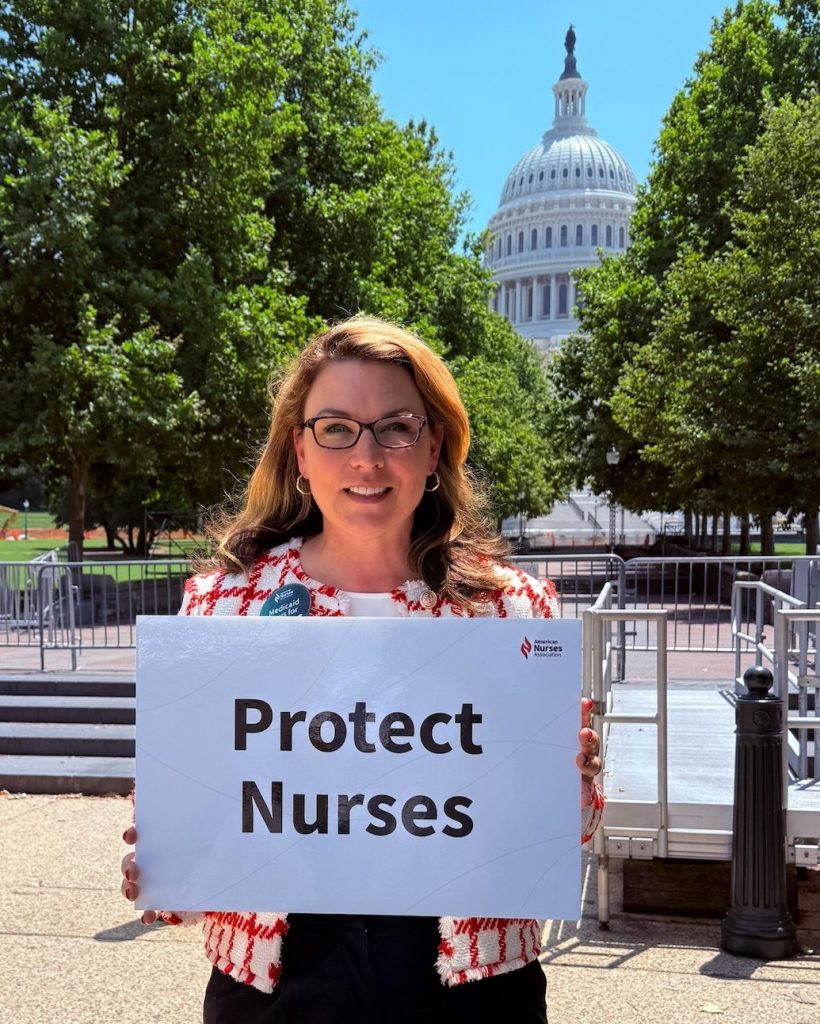
By raising awareness, supporting healthcare professionals, and advocating for comprehensive solutions, we can help ensure that everyone is protected, and every patient receives care in a safe, healing environment.
