Your Midterm Elections Toolkit


There is no shortage of policies impacting nurses today, from the U.S. Department of Education creating caps on federal loans for graduate students to the need for a national standard for workplace violence prevention. Yet, just as important as advocating for nurses while these policies are written is being part of the political process to elect officials who are drafting these proposals in the first place.  

2026 is a big election year. Although there’s no presidential race at the top of the ticket, voters must elect all 435 seats in the House of Representatives, in addition to 35 Senate races – 33 seats that are regularly up plus two special elections to fill the remainders of terms left by now-Vice President JD Vance and now-Secretary of State Marco Rubio. What’s more, 36 gubernatorial races are on the ballot in November, and several major cities – from Los Angeles to Oklahoma City to Tallahassee – are holding mayoral elections. 

With so many races on the ballot, it certainly can be overwhelming as one person to understand what’s in your toolbox in being an engaged citizen. Each option has its own cost and benefits – some may be time-intensive; others may involve money – and there’s no one-size-fits-all approach to participating in the political arena

Below is a non-exhaustive menu of ways you can be active this midterm election in making your voice heard: 

Voting

The simplest and most effective way you can participate in politics is voting.  

This year’s general election day is Tuesday, November 3, 2026. However, there may be other opportunities you have to head to the polls. While some states have already done this, many are still holding primary elections through September.
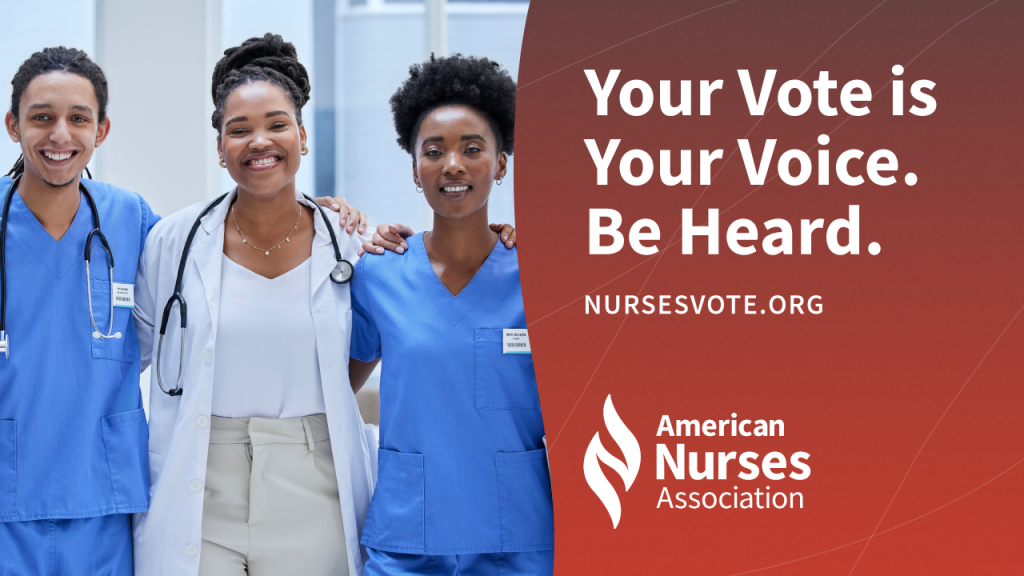
Each state has their own requirements for voting, and in most cases, you must be registered before election day. You can check with your secretary of state for voter registration deadlines and details. You can also check with your employer as some places allow individuals to take off time to vote on election day.

As you develop your plan to vote, we encourage you to visit ANA’s voting and elections center NursesVote.org. This is a one-stop-shop to find your state’s primary date, voter registration deadline, and link to your secretary of state. 

Supporting Monetarily

Another way to make sure your voice is heard is by contributing. Campaigns are expensive: according to the Federal Elections Commission (FEC), congressional candidates spent a total of $3.7 billion during the 2024 cycle. The average winning House of Representatives race raised $2.1 million last cycle, up from $1.1 million in 2008

If you’re a U.S. citizen or lawfully admitted permanent resident who is over the age of 18, is not a federal contractor, and is using your own personal funds, you can contribute to candidates, to political parties, and to political action committees (PACs). PACs are formed by associations, unions, companies, or other organizations to raise and distribute funds to aligned candidates. They allow individual donors to speak with a collective voice. 

Under the umbrella of ANA, ANA-PAC supports nurse champions running for office at the federal level. ANA members can give to ANA-PAC to help elect policymakers who will advance priorities ranging from mandatory overtime rules to nurse faculty funding.  

For more information on ANA-PAC, visit RN Action

Engaging with your Community

The next level up in time intensive civic engagement, but where you can set the terms on when and how you do it, is connecting with your community. This can range from reminding your family of upcoming voter registration deadlines, to talking to your friends about a particular issue that’s motivating you to vote, to driving your neighbors to the polls on election day.  

One resource is the nonprofit Vot-ER, which promotes civic engagement among healthcare professionals.

Volunteering for a Candidate or Cause

Another step up on the intensity level of engagement is volunteering more formally. Candidates need help with their campaigns, and you can volunteer to knock doors, make phone calls, send postcards, and help other get-out-the-vote (GOTV) efforts. If there is a candidate you want to see in office, we encourage you to volunteer with their campaign. 

You have other opportunities besides volunteering with individual candidates: you can also support causes. Many local and state governments have ballot initiatives with their own campaigns. Another option is to work with organizations in your area, as many national interest groups have state and local chapters that focus on civic engagement. 

One final volunteer opportunity is to become a poll worker. These individuals greet, verify, and walk voters through the electoral process at their voting location. The U.S. Elections Administration Commission has an easy-to-use portal to identify your local jurisdiction for volunteering, including the start and stop times, whether this role is compensated, and who to contact. 

Running for Office

In 1992, former Rep. Eddie Bernice Johnson (D-TX) became the first nurse elected to Congress. Currently, there are only three nurses serving on Capitol Hill: Reps. Sheri Biggs (R-SC), Jen Kiggans (R-VA), and Lauren Underwood (D-IL). We need more nurses and more nurse champions shaping policy in DC.  

But you don’t have to just jump in feet first into the federal level: running for office at the state, the county, or local level – or even for your state boards of nursing – will give a voice to this profession. Elected roles from PTA board member to President have the power to shape how government services are delivered.  

If you’re interested in running for office, the nonprofit Healing Politics has many resources to help, including an annual campaign school for nurses and midwives interested in working on campaigns or being a candidate. 
Standing Together for Safer Care


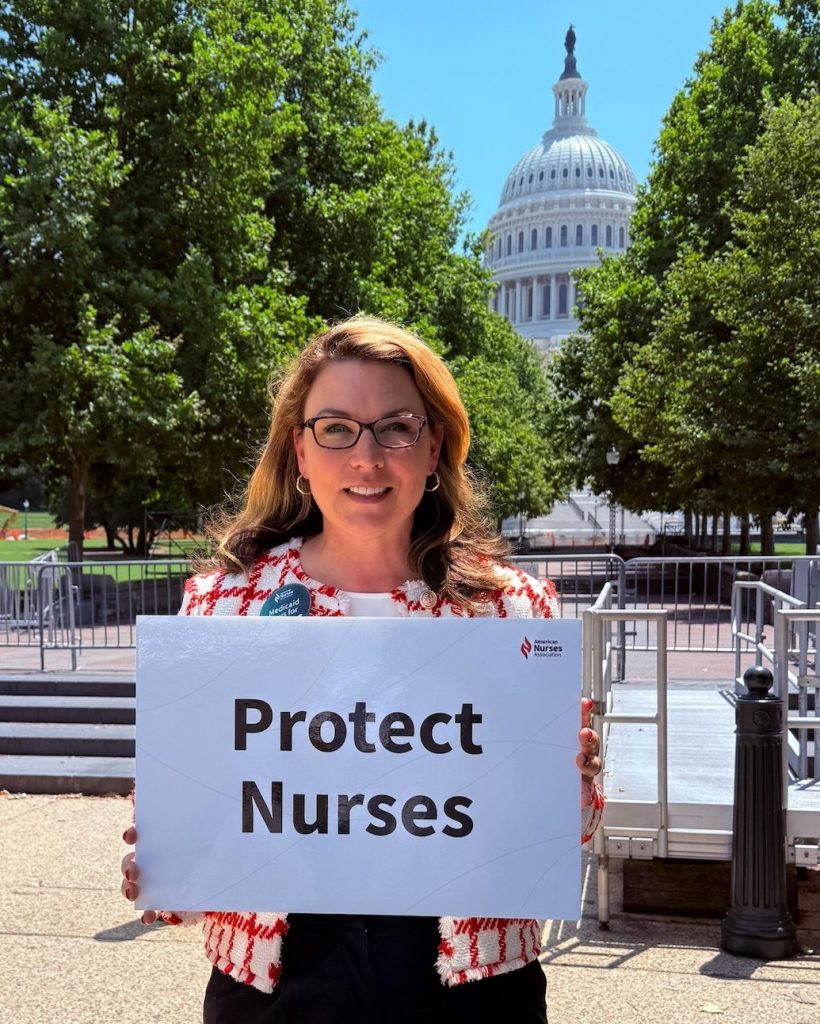
April is Workplace Violence Prevention Month, and across healthcare it marks a critical time to recognize an urgent issue affecting nurses and care teams every day: workplace violence. This month is about more than awareness—it is about standing together, across professions and communities, to say clearly and unequivocally that violence in healthcare is not “part of the job.” It is unacceptable, and it is preventable.

Every day, healthcare workers—nurses, physicians, physician associates, social workers, technicians, pharmacists, and countless others—show up to deliver care under increasingly complex and challenging conditions. Yet too often, they do so while facing the risk of physical assault, verbal abuse, harassment, intimidation, or other threatening behaviors. According to data from the U.S. Bureau of Labor Statistics, healthcare and social service workers experience workplace violence at higher rates than any other sector, a deeply troubling reality that continues to worsen.

There has been a 30% increase in workplace violence across all health care facility types between 2011 and 2021/2022.

Bureau of Labor Statistics’ Survey of Occupational Injuries and Illness

Workplace violence includes any act or threat of physical harm, harassment, intimidation, or other disruptive behavior that occurs at work. In healthcare settings, this violence affects not only nurses, but also physicians, physician associates, social workers, pharmacists, technicians, other support staff, patients, and families. For nurses in particular—who spend the most time at the bedside—these incidents can feel constant and exhausting. No act of aggression, whether verbal or physical, is acceptable.

Why Workplace Violence Prevention Matters to the Public

Workplace violence harms everyone. For healthcare workers, it contributes to stress, burnout, injury (physical and moral), and often workforce attrition. For patients and families, violence disrupts the healing environment and can delay care, reduce trust, and compromise safety. When health care professionals do not feel safe, the entire healthcare system suffers.

Healthcare settings should be places of healing, and respect—not fear. Normalizing violence in these settings strips dignity from care and weakens the ability to meet the needs of patients and communities. Protecting health care workers is not just a workforce issue; it is a patient safety issue.

A United, Cross‑Sector Response

What makes this moment different is the strength of collective action. National organizations representing nurses, hospitals, clinicians, patients, and advocates recently came together to affirm in a public statement that nobody should be harmed while providing or receiving care. Addressing workplace violence requires collaboration across the healthcare system and beyond—bringing together frontline workers, healthcare leaders, policymakers, and the public.

Preventing workplace violence means building comprehensive, coordinated solutions that focus on:

  • Establishing clear policies that prevent and respond to workplace violence
  • Clear reporting systems and accountability
  • Organizational policies that support zero tolerance for abuse
  • Supporting frontline workers through training, reporting systems, and resources
  • Promoting a culture where abuse is never tolerated or dismissed as “part of the job”
  • Designing care environments with safety in mind
  • Collaborating across disciplines and sectors to share best practices and data
  • Raising awareness and educating the public on the importance of zero tolerance for any workplace violence

Most importantly, it means listening to nurses and taking their experiences seriously.

A Call to Action

This April, during Workplace Violence Prevention Month, we ask nurses and members of the public alike to join us in standing up for safer healthcare environments. Urge your representatives to support the Workplace Violence Prevention for Health Care and Social Service Workers Act today: Take Action.

Violence in healthcare is not inevitable—it is a solvable problem when we work together and commit to meaningful change.

To learn more about the nursing profession’s position on workplace violence and the actions needed to protect nurses and patients, we encourage you to read the American Nurses Association’s Workplace Violence Position Statement.

By raising awareness, supporting healthcare professionals, and advocating for comprehensive solutions, we can help ensure that everyone is protected, and every patient receives care in a safe, healing environment.

Nursing Scores Big in FY 2026 Appropriations 


The American Nurses Association (ANA) scored several legislative wins with the enactment of the latest funding package.  

On February 3, President Donald Trump signed the Consolidated Appropriations Act, 2026 (Public Law No. 119-75) into law to end the partial government shutdown.

This $1.2 trillion package funds most of the federal government, including the U.S. Department of Health and Human Services, through September 30, 2026. The measure separately provides a continuing resolution that funds the U.S. Department of Homeland Security (DHS) for two weeks to give lawmakers extra time to negotiate a longer-term DHS bill.  

The law provides funding for or extends several healthcare programs that are critical to nurses and the patients they serve: 

  • Title VIII Nursing Workforce Development Programs
  • National Institute of Nursing Research (NINR) 
  • Telehealth flexibilities 
  • Dr. Lorna Breen Health Care Provider Protection Reauthorization Act 
  • PREEMIE Reauthorization Act 
  • Preventing Maternal Deaths Reauthorization Act 
  • Medicaid 

Here is a glimpse of several legislative wins for ANA and the broader nursing community for fiscal year (FY) 2026 in this package: 

Continued Funding for Critical Nursing Programs and NINR 

Public Law No. 119-75 provides static funding – $305.472 million – to the Title VIII Nursing Workforce Development Programs in FY 2026. For those new nursing policy wonks, the Title VIII Programs are administered by the Health Resources and Services Administration and address all aspects of nursing workforce development, including education, practice, and retention.  

While static funding may not sound like progress, it was a HUGE win given that a previous version of the Labor-HHS-Education spending bill in the U.S. House of Representatives would have cut roughly $47 million from Title VIII by eliminating funding for the Nurse Faculty Loan Program and the Nursing Workforce Diversity Program. ANA and 64 additional organizations comprising the Nursing Community Coalition worked tirelessly to express the nursing community’s concerns with the proposed cuts.  Ultimately, the final measure provided level funding by simply reallocating $2 million from the Nursing Workforce Diversity Program to other programs within Title VIII.  

The law also provides $197.693 million for the National Institute of Nursing Research (NINR) and $19.5 million for the Substance Abuse and Mental Health Services Administration (SAHMSA) Minority Fellowship Program (MFP). Within the National Institutes of Health, NINR conducts and invests in nursing research and training. The SAMHSA MFP aims to improve behavioral health outcomes for all by providing professional development and training opportunities for nurses and other healthcare professionals who comprise the behavioral health workforce. ANA is a proud MFP grantee organization. The static funding that NINR and the MFP received is a huge feat for ANA and its coalition allies given that the President’s FY2026 budget called for the elimination of NINR and reorganization of SAMHSA into the proposed Administration for a Health America (AHA).

Extension of COVID Era Telehealth Flexibilities 

Public Law No. 119-75 extends telehealth flexibilities that were first put into place during the COVID-19 public health emergency through December 31, 2027. This extension prevents a sudden return to pre-pandemic requirements and ensures patients’ access to healthcare services through telehealth. Specifically, these flexibilities allow beneficiaries to receive virtual care from their homes without geographic limits, let a broad array of clinicians furnish telehealth services, and continue coverage for audio-only visits and other remote care modalities that increase access to care.

Reauthorization of Critical Programs that Support Provider Wellbeing 

The Dr. Lorna Breen Health Care Provider Protection Reauthorization Act (H.R. 929/S. 266) was enacted into law as part of the funding package. This measure reauthorizes, through FY2030, critical programs that aim to prevent suicide and reduce occupational burnout, mental health conditions, and substance disorders among nurses and other clinicians. Initiatives include evidence-based treatments, suicide and burnout prevention training, and national education and advocacy campaigns to improve awareness and reduce stigma around getting help. For the first time, grant eligibility will now be expanded to include entities focused on reducing administrative burdens on nurses and other clinicians.  

ANA was proud to advocate for reauthorization of these programs in collaboration with the Dr. Lorna Breen Heroes’ Foundation and other healthcare organizations through the All In Wellbeing First for Healthcare Coalition

Maternal & Child Health Funding and Reauthorizations 

Public Law No. 119-75 includes FY 2026 funding for several maternal and child health programs, including Healthy Start, the Maternal and Child Health Services Block Grant, newborn screenings, the Safe Motherhood Initiative, and the Maternal Mental Health Hotline.  

The package also reauthorizes critical maternal and infant health programs through the passage of the PREEMIE Reauthorization Act (S.1562/H.R. 1197) and the Preventing Maternal Deaths Reauthorization Act (S.2621)/H.R. 1909) through FY2030. These programs advance research, education, and interventions to reduce preterm birth, while bolstering federal support for maternal mortality review committees that help states better understand and prevent pregnancy-related deaths. ANA was proud to partner with 260+ partner organizations to advocate for the reauthorization of these programs. 

Medicaid Makes a Comeback 

Last year, ANA and its allies were crushed when Congress voted to overhaul the Medicaid program through the enactment of the One Big Beautiful Bill Act, despite our extensive advocacy efforts to defend the program. While the program is still slated to undergo significant changes that will impact patients’ access to care and the nursing workforce, the funding law enacts bipartisan measures that aim to improve access, coverage, and program administration. 

The Accelerating Kids’ Access to Care Act of 2025 (H.R. 1509/S. 752) requires states to establish a process through which qualifying out-of-state providers can temporarily treat children under Medicaid and the Children’s Health Insurance program without undergoing additional screening. The Ensuring Access to Medicaid Buy-In Programs Act (H.R. 1598) removes age restrictions on Medicaid eligibility for working adults with disabilities, allowing them to maintain coverage beyond age 65. The funding package also requires states to adopt clearer residency and coverage standards for military families. Finally, Public Law No. 119-75 directs the states and HHS to study the costs of maternity, labor, and delivery services to help inform Medicaid payment policies in the future.